
30 questions you never asked your mother and that now remain unanswered
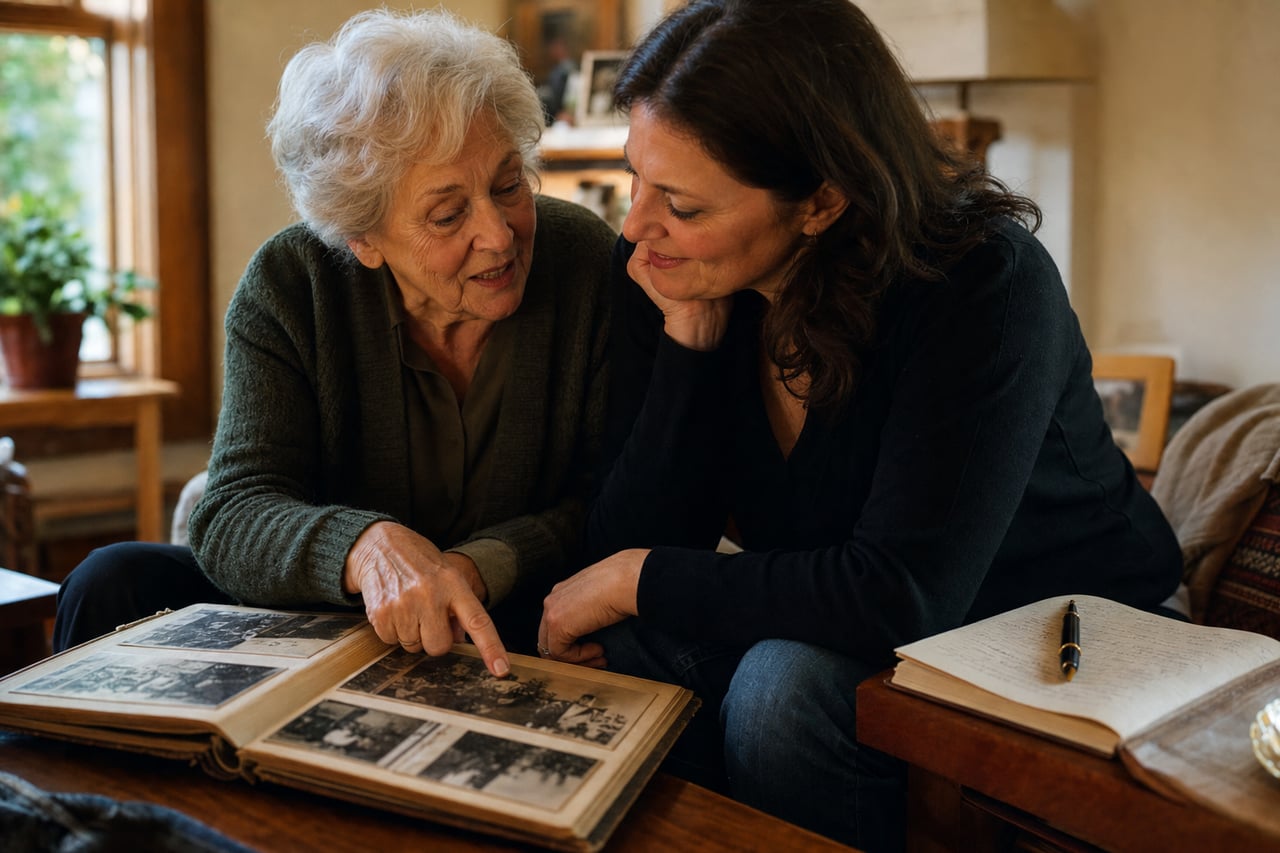
Questions almost everyone leaves unasked of their mothers. So you can ask them in time if you still can, or recognize them if you can't anymore.
There is a moment when every daughter and every son discovers the same thing. You’re at your mother’s house, you open a drawer, you find a photo of a young woman you don’t recognize, and you think: “who was she?”. And then you realise you’ve never asked her.
It’s not just the photos. It’s everything. Small things, a recipe only she knew, the name of that childhood friend, and big things, what she felt when her own mother died, why she moved to the city when she did, what she would have liked to say and never did.
Almost no one is left with the big questions unanswered because they didn’t care. They are left with them because they thought there would be time. It’s the same reason your father never told you half of what he lived: it isn’t that he didn’t want to, it’s that it never came up.
Why we never find the right moment
You don’t ask a mother about her life cold. It doesn’t work to sit down on a Sunday and say “Mum, tell me who you were.” The conversation closes before it even begins.
Questions to a mother get asked along the way. They come up when a name appears, a photo, a song. They get asked in the kitchen while she’s preparing something, in the car on the way back from somewhere, watching a film. They get asked when she’s already half asleep on the sofa and her guard is down.
That’s why most of them go unasked. Not because we didn’t want to know. Because those moments aren’t sought, they’re caught. And the day you stop having opportunities, there was no way to know that last Thursday afternoon was the last one.
30 questions people regret never having asked
They aren’t all here, and the order doesn’t matter. Read them thinking about your mother. Some you’ll know how to answer for her, that already tells you something about what she did let you know. Others will hurt because you have no idea what the answer is.
About her childhood
- What was the house where you grew up like? Which room did you sleep in?
- Who taught you the things your mother, my grandmother, didn’t teach you?
- What’s the first clear memory you have? How old must you have been?
- What did you like doing when you were on your own as a little girl?
- What were you afraid of when you were seven?
About her parents (your grandparents)
- How did your parents meet? Did they ever tell you the story?
- What would you have liked to ask your mother and never asked?
- In what ways are you like your mother, and in what ways like your father? Has that changed over the years?
- What was the day your mother died like? And your father?
- What do you miss about them now that you didn’t miss twenty years ago?
About her youth and love
- Who was the first person you really fell for? What happened with her or him?
- How did you meet Dad? What did you think the first time you saw him?
- Was there anyone before Dad you found hard to forget?
- When did you decide you wanted to marry him? Did you ever doubt it?
- When was the happiest moment of your life?
About work and decisions
- What did you want to be when you were fifteen?
- Why did you end up doing what you did, or stop doing it? Do you regret anything about that choice?
- What was the hardest decision you ever made and that nobody at home ever knew about?
- Was there a boss, a colleague, someone who left a mark on you? Does that person know what they meant to you?
- What did you stop doing because you had children? Have you regretted it?
About me, your son or daughter
- What was the day I was born like? Do you remember exactly what happened?
- What did you think the first time you held me?
- What has surprised you about me, for better or worse, as I was growing up?
- Is there anything about me that reminds you of someone, your mother, a sister, someone who’s no longer here?
- What do you want me to know about you that you think I haven’t quite understood?
About what she thinks, feels, believes
- What do you believe in? Has that changed over the course of your life?
- What are you really afraid of? Not film-fear, your fear.
- Is there anyone you should have made peace with and never did?
- If you could go back, what would you change? And what would you leave exactly as it was?
- What would you like your children to always remember about you?
How to ask them if your mother is still alive
If your mother is alive, don’t send her this list. It’s a favour you do for yourself, not for her.
What you can do: choose three or four of these questions that genuinely interest you, and look for the moment. Not “let’s sit down for an interview”. A long lunch. A regular coffee. A long car journey. Say something like “Mum, there’s a thing I’ve been wanting to ask you for a while…”, and let her decide whether to answer today or tomorrow.
If asking directly doesn’t quite work, there’s a more graceful way: give her the place where she can tell it at her own pace, without it feeling like an interrogation.
Many older people find it hard to talk about themselves seriously. But almost all of them want to tell it if they find someone who asks without rush and listens without interrupting. And you’ve been that person all your life, you just never asked.
Don’t be afraid of silence. After some of these questions, long silences are the best thing that can happen in the conversation.
If your mother is no longer here
This is harder and at the same time simpler.
If your mother is no longer here, there’s no way to recover the answers. But there are people who do know them. Your father, if he’s alive. Her sisters. Her old friends. One of your aunts. A neighbour from the village. The people who knew her well.
Not all the questions can be answered by them, obviously. What your mother thought when her own mother died, how she felt the day you were born, only she knew that. But the facts, yes. The stories, yes. The face she made telling them, the people, the names.
Doing that round, sitting an afternoon with your aunt and asking about her sister, calling that childhood friend who’s still alive, gathering what each of them held, won’t bring your mother back. But it will give you back a version of her you didn’t have. And that version is the one your children will inherit from you.
What you learn from all this
People don’t leave these questions unasked because they don’t care about their mother. They leave them unasked because talking about death while the person is alive feels in poor taste, because we think there’ll be more time, because we don’t know how to open the conversation, because we’re afraid of the answer.
And then time runs out, always sooner than expected, and we’re left with the list. The list of questions we can now only answer halfway, reading between the lines of the things she didn’t quite manage to tell us.
If this has made you think about your mother, good. If it has made you think about yourself as a mother or a father, also, because there’s something you’re probably already imagining: that your children, in a few years, will have a similar list about you. The question of what your children really know about you almost always has an uncomfortable answer. And whether you leave them with it or not, you decide today, while you can.
If you want to leave the people closest to you the things you couldn’t ask of yours, start your book with Legatio. No forms, no need to sit and write, no pressure. You tell your life in small doses and our AI composes it into a book in your voice.
Keep reading

The quiet satisfaction of telling how you lived it, not just what happened
There's a quiet satisfaction in sitting down to tell not what happened to you, but how you lived it inside. That is what only you can leave behind.
What do your children really know about you, and all they'll never get to know
What your children think they know about you is probably less than you took for granted. Why it happens, what they're missing, and what to do today.
How to give your father or your mother a place to tell what they've never told you
Why the important conversation with your parents never happens, why asking for it directly doesn't work, and how to give them a space without things getting awkward.